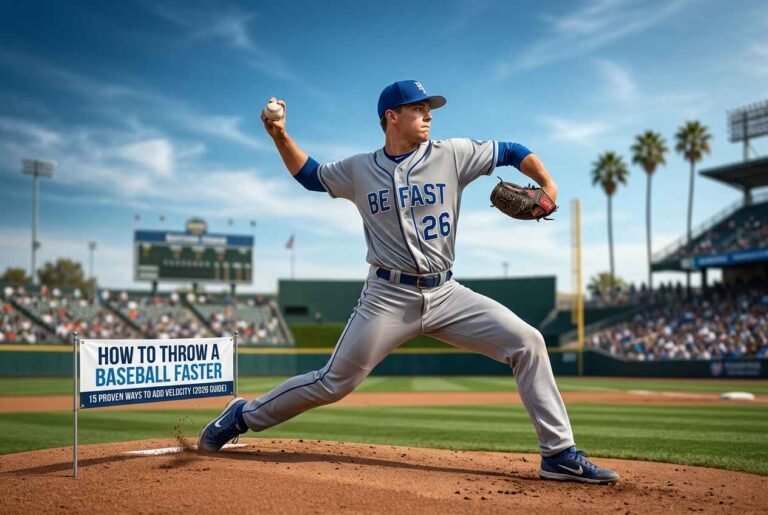
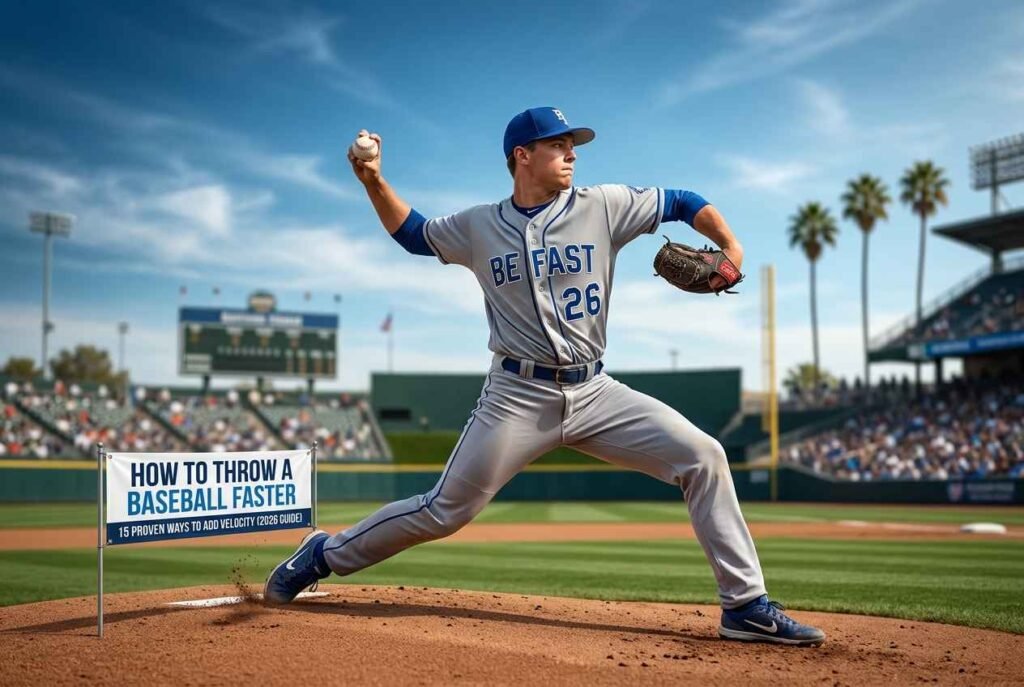
Every pitcher, outfielder, and catcher wants to know how to throw a baseball faster. Speed helps you strike out batters. It also helps you gun down runners and make stronger throws from deep in the field. However, velocity does not come from one secret trick. It comes from good mechanics, a strong body, smart training, and enough rest. In this guide, you will learn how to throw a baseball faster step by step, in a safe and simple way.
If you love baseball coverage, you can also follow daily sports stories on Sports Tamasha, Sports News Era, and Sports Dastak.
Quick Answer: How to Throw a Baseball Faster in 60 Seconds
Most velocity comes from your legs, hips, and trunk. Your arm only finishes the job. So the fastest way to add speed is to improve the full body chain. Here are the core steps.
- Use your legs: Push hard off the rubber and drive toward the target.
- Rotate your hips first: Let the hips open before the shoulders.
- Stay connected: Keep your body moving as one unit.
- Grip the ball well: Use fingertips, not the palm.
- Build strength and mobility: Train legs, core, back, and shoulders.
- Throw often, but recover well: Use long toss and rest days.
- Protect your arm: Warm up, track pitches, and stop when you feel pain.
In short, learning how to throw a baseball faster means learning to use the whole body. Bigger arm swings alone rarely work, and they often lead to injury.
Table of Contents
- The Science Behind Throwing Speed
- Step 1: Fix Your Grip
- Step 2: Use Your Legs and Lower Body
- Step 3: Rotate Hips Before Shoulders
- Step 4: Build a Smooth Arm Path
- Step 5: Get Your Stride Right
- Step 6: Perfect Your Release and Finish
- Strength Training for More Velocity
- Mobility and Flexibility
- Long Toss
- Weighted Balls and Overload Training
- Best Drills to Throw Harder
- A Safe Warm-Up Routine
- Recovery, Sleep, and Nutrition
- Common Mistakes
- Advice for Youth Players
- A Simple Weekly Training Plan
- FAQ
The Science Behind How to Throw a Baseball Faster
Before you start drills, you should understand how to throw a baseball faster in terms of body movement. A throw is a chain reaction. Coaches call it the kinetic chain.
The Kinetic Chain Explained
Energy starts in the ground. Then it moves through the legs, hips, trunk, shoulder, elbow, and hand. Finally, it transfers into the ball. Each part passes energy to the next part. If one link is weak or late, the ball loses speed.
For example, a pitcher with a strong lower body but a stiff upper back may lose energy in the middle. On the other hand, a pitcher with a strong arm but weak legs has to create speed with the arm alone. That approach is slow and risky.
Why the Arm Is Not the Engine
Many young players believe that throwing hard means having a strong arm. In reality, the arm is more like the whip end of the chain. The legs and trunk create most of the power. Consequently, the best way to learn how to throw a baseball faster is to fix the parts below the arm first.
Three Pillars of Velocity
- Mechanics: Efficient movement that passes energy well.
- Strength and power: A body that can create force quickly.
- Health: A body that can throw often without pain.
You need all three. If you skip one, your progress will stall.
Step 1: Fix Your Grip to Throw a Baseball Faster
Grip seems small, yet it matters a lot. A poor grip slows the ball and hurts control.
The Four-Seam Grip
The four-seam fastball is the fastest common pitch. To use it, place your index and middle fingers across the wide part of the seams. Then place your thumb underneath the ball, near the bottom seam. Keep a small gap between the ball and your palm.
Fingertip Pressure
Hold the ball with your fingertips. A tight palm grip kills backspin and wrist snap. So imagine you are holding a raw egg. Your hold should be firm but relaxed.
Stay Loose Before Release
Tension slows the arm. Therefore, keep your hand and forearm relaxed until the last moment. Then squeeze through the ball as you release it.
Grip for Other Throws
Position players use a similar grip. Most infielders and outfielders use a four-seam grip on throws, because it gives a straighter path. That habit helps you throw a baseball faster and more accurately.
Step 2: Use Your Legs and Lower Body
Your legs create the foundation. If you want to know how to throw a baseball faster, start here.
Push Off the Ground
Pitchers push off the rubber with the back leg. Fielders push off the back foot when they crow-hop. In both cases, you want a strong drive toward the target. Do not just fall forward. Instead, push hard and move with purpose.
Build a Strong Back Leg
A weak back leg gives you a weak drive. So train squats, lunges, and jumps. Also, practice pushing off in your drills. Strong legs allow you to move faster without losing balance.
Stay Balanced at the Top
Before you move forward, find a balanced position. In a pitcher’s motion, this is the top of the leg lift. Stand tall and stay steady. Then start your drive. Good balance makes your stride cleaner, and it helps you repeat the motion.
Drive Down the Line
Aim your energy at the target. Wasted side-to-side movement burns speed. Therefore, keep your body moving in a straight line toward home plate or your target.
Step 3: Rotate Hips Before Shoulders
Hip and shoulder separation is a key idea in how to throw a baseball faster. It means your hips turn toward the target before your shoulders do.
Why Separation Adds Speed
When the hips open first, the trunk stretches like a rubber band. Then the shoulders snap forward and release the stored energy. This stretch-and-release action adds real velocity.
How to Feel It
Try this simple drill. Stand sideways with a ball in your hand. Turn your hips toward the target, but keep your chest facing sideways. Hold that position for a moment. Then let the chest follow. You should feel a stretch across your core.
Avoid Opening Too Early
Some players open the shoulders too soon. As a result, they lose power and put more stress on the arm. To fix this, keep your front shoulder closed a little longer. Let the hips lead.
Step 4: Build a Smooth Arm Path
Arm action should look smooth and easy. A rushed or forced arm hurts control and health.
Get the Arm Up in Time
Your throwing arm should reach a strong “cocked” position as your front foot lands. If the arm is late, you will feel rushed. Then you may try to muscle the ball. That habit is a common reason players lose speed.
Keep the Elbow at a Safe Height
Most coaches like the elbow near shoulder height at foot strike. A very low elbow can strain the shoulder. A very high elbow can strain other areas. So aim for a natural, balanced arm slot.
Use External Rotation
External rotation is the layback of the forearm just before the ball comes forward. It is a huge speed source. However, it needs healthy shoulders and good mobility. Do not force it. Build range slowly with mobility work.
Let the Arm Accelerate Naturally
The arm should speed up in the final part of the throw. It should not start fast. If you swing the arm too early, you waste energy. So stay smooth, and let speed build as the chain moves forward.
Step 5: Get Your Stride Right
Your stride sets the stage for the throw. A stride that is too short cuts power. A stride that is too long hurts balance.
Find the Right Length
Many coaches suggest a stride length of about 80% to 100% of your height. Still, every athlete is different. So test a few strides and see what feels strong and balanced.
Land Closed and Direct
Your front foot should land pointing near the target, not far open or far closed. A foot that lands wide to the side leaks energy. Meanwhile, a foot that lands too far across the body blocks the hips.
Firm Front Side
When your front foot lands, the front leg should firm up. This action acts like a brace. It lets the trunk rotate fast over a stable base. Without it, energy leaks out of the motion. So practice landing with a strong front leg.
Step 6: Perfect Your Release and Finish
The last part of the throw finalizes how to throw a baseball faster. Do not ignore it.
Release in Front
Release the ball out in front of your body. A late or early release changes direction and speed. Try to feel the ball leave your fingertips as your arm passes your head.
Finish Through the Target
After release, let the arm continue across your body. Then let your back leg swing around. This full follow-through is not just for show. It helps slow the arm safely. It also shows that you used your body well.
Stay Athletic
End the throw in a balanced, ready position. If you fall off to the side, your motion probably has a leak somewhere. So check your stride and hip drive again.
Strength Training for How to Throw a Baseball Faster
Strength is a big part of how to throw a baseball faster. Stronger athletes can produce more force, and that force becomes speed. However, you must train smartly.
Lower Body Exercises
- Squats: Build leg strength and hip drive.
- Deadlifts or hip hinges: Train the glutes and hamstrings.
- Lunges: Improve single-leg strength and balance.
- Box jumps and broad jumps: Build explosive power.
Core Exercises
- Planks and side planks: Build stability.
- Medicine ball rotational throws: Train fast trunk rotation.
- Cable or band rotations: Strengthen the twisting muscles.
- Dead bugs and bird dogs: Improve control.
Upper Body and Back Exercises
- Rows and pull-ups: Strengthen the upper back.
- Push-ups and presses: Build the chest and shoulders.
- Face pulls and band pull-aparts: Protect the rear shoulder.
- Forearm and grip work: Support the elbow and hand.
Rotator Cuff and Scapular Work
The small muscles around your shoulder guard the joint. So train them often. Use light bands for external rotation, internal rotation, and scapular raises. These exercises will not add speed on their own. Yet they keep the arm healthy, and health lets you train consistently.
Power Over Size
You do not need to be huge to throw hard. Speed comes from power, which means force produced quickly. So include fast movements like jumps and medicine ball throws. Do not only lift slow and heavy.
How Often to Lift
Most players do well with two to three full-body sessions each week. Beginners should start lighter and focus on form. Also, tell your coach or trainer about your throwing schedule. That way, you avoid piling on too much work.
Mobility and Flexibility to Throw a Baseball Faster
A tight body limits speed. Good mobility lets you move through a full range without strain.
Key Areas to Stretch
- Hips: Tight hips reduce rotation.
- Thoracic spine (upper back): It allows the trunk to turn.
- Shoulders: Healthy range supports layback.
- Ankles and hamstrings: They support your stride and landing.
Useful Mobility Moves
- World’s greatest stretch for hips and upper back.
- 90/90 hip switches for hip rotation.
- Thoracic rotations on all fours.
- Sleeper stretch, if your coach approves it, for the rear shoulder.
- Hamstring and calf stretches for your stride.
Do dynamic movements before you throw. Save long static holds for after practice. This order keeps your muscles ready and your joints healthy.
Long Toss: A Classic Way to Throw a Baseball Faster
Long toss is one of the oldest ways to build arm speed and stamina. Many pro players use it in some form.
How It Works
You start with easy throws at short distance. Then you back up gradually. As the distance grows, you must use more legs and a bigger arm path to get the ball there. That effort trains your body to throw with force.
How to Do It Safely
- Warm up fully first.
- Start at 30 to 45 feet and throw easy.
- Back up in small steps.
- Use a crow-hop to build momentum.
- Reach your max distance only when you feel loose.
- Then work back in with smooth, lower throws.
Watch the Workload
Long toss counts as arm stress. So do not add it on top of heavy pitching without planning. Also, stop if you feel sharp pain, or if your arm feels unusually tired. Ask a coach to help you set a plan.
Weighted Balls and Overload Training
Many facilities now use weighted baseballs, also called overload and underload training. The idea is simple. You throw balls that are heavier and lighter than a normal baseball. Some studies suggest this can raise velocity in some athletes.
Benefits
- It trains the arm to move faster.
- It can improve body awareness.
- It gives structure to a velocity plan.
Risks
However, weighted balls add stress. Athletes who use them without guidance can hurt their elbows or shoulders. Youth players are especially at risk. So use them only with a qualified coach, and follow a careful program. If you feel pain, stop right away.
For a deeper look at training methods, you can visit trusted training resources like Driveline Baseball. Always compare advice with your own coach and doctor.
Best Drills for How to Throw a Baseball Faster
Drills break the motion into small pieces. They teach your body to move in the right order. Try these drills a few times each week.
1. Towel Drill
Hold a small towel by one end. Go through your throwing motion and snap the towel toward the target. You should hear a crack near the end. This drill teaches arm speed and a clean finish, with no ball needed.
2. Step-Behind Throws
Stand sideways to the target. Step behind your front foot, then throw. This drill builds momentum and hip rotation. It also feels like a crow-hop in the outfield.
3. Knee Drill
Kneel on your back knee with your front foot forward. Throw from this position. It isolates the upper body and trunk. As a result, you can focus on rotation and arm path.
4. Medicine Ball Rotational Throws
Stand sideways to a wall. Rotate your hips first, then your trunk, and then throw a medicine ball into the wall. Use a light ball, and stay fast. This drill trains the hip-shoulder chain directly.
5. Pivot Pickoff Drill
Stand on the rubber, spin toward second base, and throw. This drill builds quick footwork and a strong lower half. Pitchers often use it to improve balance and rhythm.
6. Wall Drill for Mechanics
Stand in front of a wall in your pitching setup. Run through the motion slowly. The wall shows you if your arm swings too wide, or if your back leg drags. It is a great feedback tool, and it needs no partner.
7. Line Drills
Draw a line toward your target. Land your front foot on it each time. This drill checks your direction and your balance.
A Safe Warm-Up Routine for How to Throw a Baseball Faster
A good warm-up helps performance and protects the arm. Learning how to throw a baseball faster is pointless if you get hurt. So use a routine like this one.
- General warm-up (5 minutes): Light jog, jumping jacks, or skipping.
- Dynamic stretching (5 minutes): Leg swings, arm circles, torso twists, and lunges with rotation.
- Band work (5 minutes): Shoulder external and internal rotations, and scapular raises.
- Easy throwing (10 minutes): Start close and throw softly. Then move back gradually.
- Ramp up: Throw a few near-full-effort throws before you compete.
Take your time. Rushing the warm-up is a common cause of early season soreness.
Recovery, Sleep, and Nutrition to Throw a Baseball Faster
Training makes you tired. Recovery makes you stronger. So it is a key part of how to throw a baseball faster.
Sleep
Sleep is when your body repairs tissue. Most teenagers and young adults need around eight to ten hours per night. If you sleep too little, you may lose power and focus. Moreover, you may raise your injury risk.
Nutrition
Eat enough to fuel your training. Include lean protein, whole grains, fruits, vegetables, and healthy fats. Protein helps muscle repair. Carbohydrates give energy for practice. Also, drink water throughout the day. Even mild dehydration can hurt performance.
Rest Days
Arms need days off from throwing. Continuous throwing without rest leads to fatigue, and fatigue leads to bad mechanics. Therefore, schedule rest days in your week, and take an off-season break each year.
Soreness vs Pain
Muscle soreness feels dull and general. Sharp, focused pain in the elbow or shoulder is different. If you feel sharp pain, stop throwing and see a doctor or athletic trainer. Do not try to “throw through it.”
Common Mistakes When Learning How to Throw a Baseball Faster
Many players want to learn how to throw a baseball faster but repeat the same errors. Avoid these.
- Only training the arm. Speed starts in the legs and hips.
- Throwing with tension. A stiff arm is a slow arm.
- Skipping warm-ups. Cold muscles perform badly and risk injury.
- Overthrowing. Too many pitches or throws cause fatigue.
- Chasing radar gun numbers daily. It adds pressure and ruins mechanics.
- Ignoring mobility. Tight hips and back limit your rotation.
- Copying pros without a base. Your body is not the same as theirs.
- Training through pain. Pain is a warning sign.
- Not sleeping enough. Recovery drives progress.
How to Throw a Baseball Faster for Youth Players
Young players are still growing, so how to throw a baseball faster must be taught gently. So their plan must be gentler. Here are key rules for parents and coaches.
Focus on Skill First
Before age 14 or so, mechanics and coordination matter more than raw speed. Encourage kids to play multiple sports. That habit builds balanced athletes and reduces overuse.
Respect Pitch Limits
Organizations like MLB Pitch Smart provide guidelines for pitch counts and rest days by age. For example, the daily maximum is 75 pitches for ages 9 to 10, and 85 for ages 11 to 12. Older ranges go higher, up to 105 for ages 17 to 18. Please check the latest guidance before each season.
Avoid Heavy Weighted Balls Too Early
Young arms are still developing. So avoid aggressive overload programs unless a qualified coach and doctor agree. Body-weight exercises, light bands, and good mechanics are safer at this stage.
Avoid Playing for Multiple Teams at Once
Pitching for two teams at the same time often causes overuse. So track all pitches, not just those thrown for one team.
You can also learn more from the USA Baseball site, which shares youth development and health resources, and from the American Sports Medicine Institute, which publishes research on throwing injuries.
A Simple Weekly Plan for How to Throw a Baseball Faster
Here is a sample week for a healthy high school player in season or preseason. Adjust it with your coach.
| Day | Focus |
|---|---|
| Monday | Full-body strength session, plus mobility work |
| Tuesday | Throwing session with drills and a moderate long toss |
| Wednesday | Light recovery, stretching, and arm care bands |
| Thursday | Power session: jumps, med ball throws, and lower body lifts |
| Friday | Bullpen or game practice, with a full warm-up |
| Saturday | Game or light throwing, plus mobility |
| Sunday | Full rest |
This plan is a template. Some players need more rest. Others may need less throwing and more strength. Above all, listen to your body.
How Long Does It Take to Throw a Baseball Faster?
Many players want quick results from how to throw a baseball faster plans. Sadly, velocity gains take time. Beginners may see gains in a few weeks because their mechanics are easy to fix. Advanced players may need several months for a small jump. So set realistic goals.
Track your progress in a simple way. Record your speed once every few weeks, not every day. Also, keep notes on sleep, soreness, and mood. These notes can show what works for you.
Use Technology Wisely
Radar guns and pitch trackers give useful feedback. Slow-motion video is also very helpful. Film your motion from the side and from behind. Then compare it to good models. Even so, avoid chasing numbers at every session. Keep your focus on movement quality.
Mental Skills for How to Throw a Baseball Faster
Your mind affects your body. A tense, anxious player often throws slower. So include mental training in your plan.
- Visualize your throw. Picture a smooth, powerful motion before you begin.
- Use a routine. Take a breath, pick a target, and go.
- Stay confident. Do not tighten up after a bad throw.
- Set process goals. Focus on strong legs and a clean finish instead of only speed.
These habits help you stay calm and athletic. As a result, your body moves more freely and quickly.
Learn From the Pros
Watching elite players can teach you a lot. Notice how a top pitcher uses the legs. See how the hips open early and the shoulders stay closed. Then look at the smooth finish. Pros seem to throw with little effort, yet the ball explodes out of the hand. That is the result of good sequencing, not just a big arm.
You can follow game action and player stories on Sports Tamasha, Sports News Era, and Sports Dastak. Also, official league pages like MLB.com share video and stats that you can study.
Equipment for How to Throw a Baseball Faster
You do not need fancy gear to learn how to throw a baseball faster. Still, a few tools are useful.
- Resistance bands: For shoulder and arm care.
- Medicine balls: For rotational power.
- A throwing net or wall: For solo practice.
- A phone tripod: For video feedback.
- Good cleats or turf shoes: For strong footing.
- A properly sized glove and balls: For safe, consistent throws.
Start simple. Add tools only when you know how you will use them.
FAQ: How to Throw a Baseball Faster
What is the fastest way to throw a baseball faster?
The fastest way is to fix your lower body and hip rotation first, then build strength and mobility. Add long toss and drills under a coach’s guidance. Speed comes from the whole body, not only from the arm.
Can anyone learn how to throw a baseball faster?
Yes. Genetics matter, but most players can add speed with better mechanics, strength, and training. The size of the gain depends on age, health, and starting level.
Does long toss increase velocity?
Many coaches believe long toss helps because it trains the arm and body to throw with more effort and range. It works best inside a well-planned program with proper rest and warm-ups.
Are weighted baseballs safe?
They can work for some athletes, but they add stress to the arm. Use them only with a qualified coach. Youth players should be especially careful.
How can I throw harder without hurting my arm?
Warm up well, follow pitch counts, take rest days, and build strength in the legs, core, and shoulders. Stop if you feel sharp pain, and see a professional if the pain continues.
What exercises help me throw a baseball faster?
Squats, deadlifts, lunges, jumps, medicine ball throws, rows, and rotator cuff band work are all useful. Add core exercises for stability and rotation.
How can I throw a baseball faster at home?
Use the towel drill, wall drill, band work, and bodyweight leg exercises. Practice your balance and hip rotation without throwing hard. Use a net or a safe wall if you want to throw.
How long does it take to add 5 mph?
There is no set timeline. Some athletes improve within a few months, while others need a year or more. Steady training, good sleep, and safe mechanics matter most.
Does age affect throwing speed?
Yes. Velocity usually rises through the teen years and early twenties as the body grows and gets stronger. Still, players of many ages can improve their mechanics and strength.
Should I see a coach?
A qualified coach can spot mechanical problems that you cannot see. Video review and one-on-one feedback often speed up progress. If you have pain, see a doctor or athletic trainer first.
Final Thoughts: Your Path to a Faster Throw
You now know how to throw a baseball faster in a smart and safe way. Start with a good grip. Then build a strong lower half, and rotate the hips before the shoulders. Keep the arm smooth, finish through the target, and train your body with strength, mobility, and good drills. Finally, protect your arm with warm-ups, rest, and sleep.
Remember these key points:
- Speed comes from the legs, hips, and trunk, not only the arm.
- A relaxed grip and a smooth arm path add velocity.
- Strength, power, and mobility support your mechanics.
- Long toss and weighted balls can help, but they need careful use.
- Recovery and pitch counts protect your arm for the long term.
Stay patient and consistent. Small gains add up over months. For more sports guides, news, and updates, visit Sports Tamasha, Sports News Era, and Sports Dastak.
Note: This article is for general education. It is not medical advice. Please talk to a coach, doctor, or athletic trainer before starting a new training program.