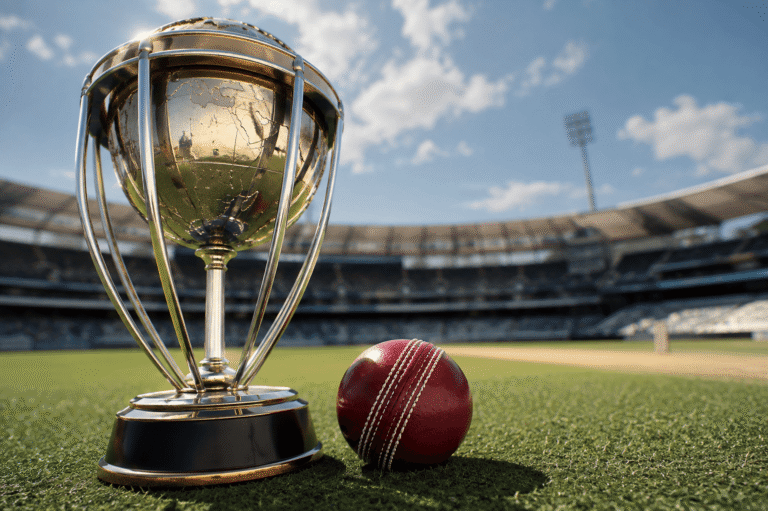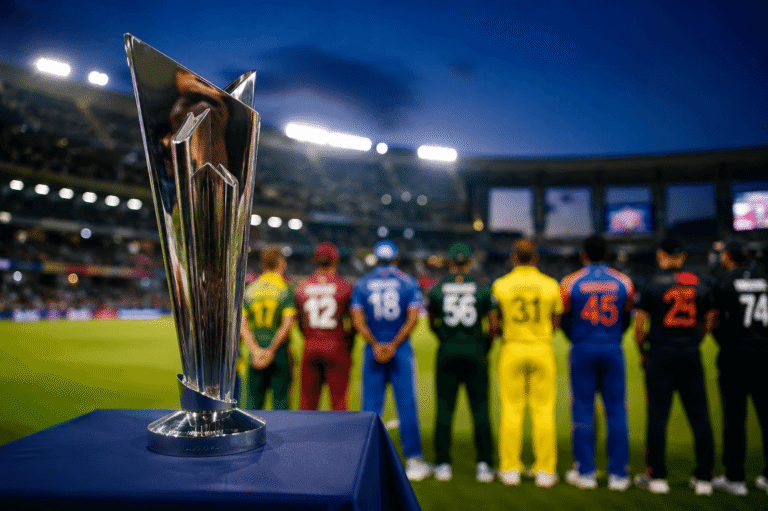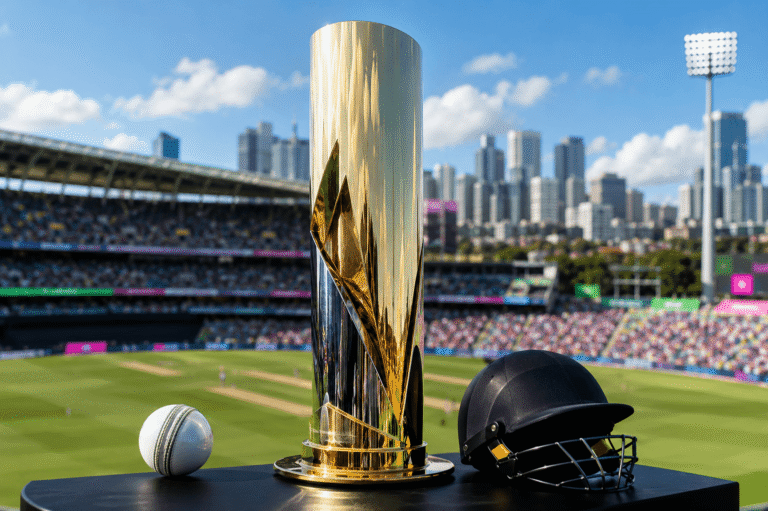
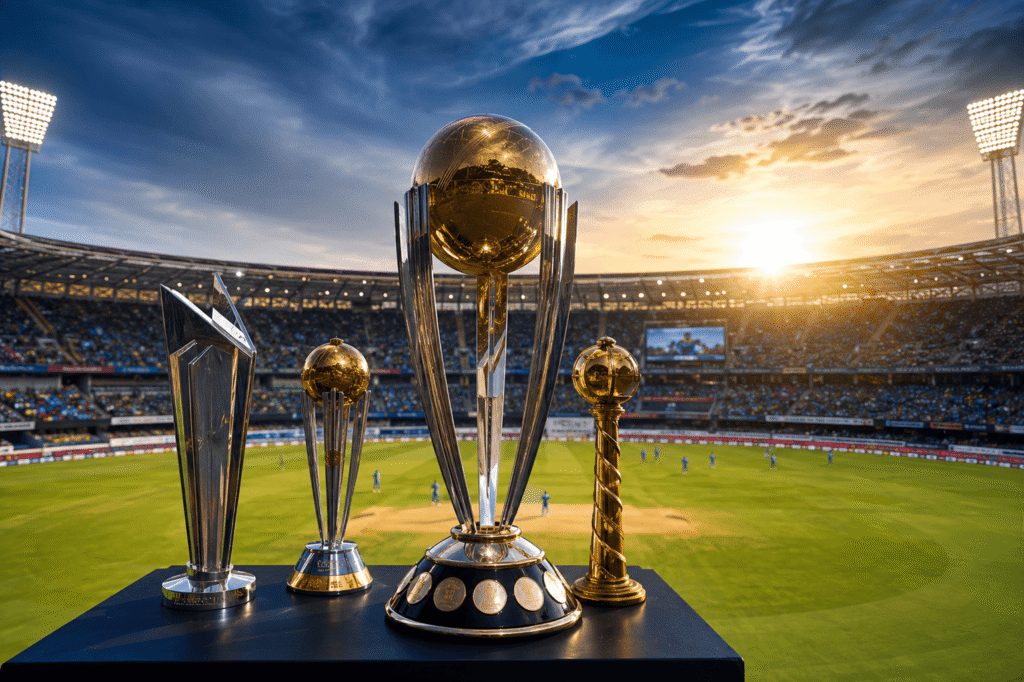
ICC tournaments represent the pinnacle of international cricket competition, bringing together the world’s best national teams across formats to determine global champions in events that carry the highest possible stakes and prestige within the sport. From the ODI and T20 World Cups to the World Test Championship and Champions Trophy, these tournaments define cricket’s international calendar and provide the sport’s most significant moments of national pride and sporting achievement. This guide provides an overview of the major ICC tournaments and how they fit together within world cricket’s broader structure.
The Major Global Tournaments
The ICC organizes several flagship tournaments across formats, including the fifty-over Cricket World Cup, the T20 World Cup, the Champions Trophy, and the World Test Championship, each carrying its own distinct format, qualification pathway, and historical significance within the sport. Together, these tournaments give context and stakes to bilateral cricket throughout the calendar, since strong performances often feed directly into qualification for these marquee global events.
Qualification Pathways to ICC Events
Qualification for major ICC tournaments typically combines automatic entry for top-ranked teams with separate qualifying tournaments for the remaining spots, giving nations outside the sport’s traditional powerhouses a genuine pathway to compete on the biggest stage. These qualifying campaigns, while receiving less mainstream attention than the tournaments themselves, carry immense significance for the participating nations, often determining a country’s cricketing trajectory for years afterward.
Women’s ICC Tournaments
Alongside the men’s events, the ICC organizes parallel women’s tournaments including the Women’s Cricket World Cup and Women’s T20 World Cup, which have grown substantially in visibility, quality, and commercial significance over the past decade. This growth reflects the broader industry-wide investment in women’s cricket, with these tournaments now receiving broadcast treatment increasingly comparable to their men’s equivalents.
How ICC Tournaments Shape the International Calendar
Major ICC tournament windows occupy fixed positions in the international cricket calendar, with bilateral series and franchise leagues generally scheduled around these events rather than the reverse. This structural priority reflects the ICC tournaments’ status as the sport’s ultimate prizes, with national boards and players alike treating World Cup and championship windows as the calendar’s most significant fixtures.
Frequently Asked Questions
What are the major ICC tournaments?
They include the ODI and T20 World Cups, the Champions Trophy, and the World Test Championship, alongside parallel women’s events.
How do nations qualify for ICC tournaments?
Qualification typically combines automatic entry for top-ranked teams with separate qualifying tournaments for remaining spots.
Why are ICC tournaments prioritized in the cricket calendar?
They represent the sport’s ultimate prizes, so bilateral series and franchise leagues are generally scheduled around these fixed tournament windows.
Conclusion
ICC tournaments remain the defining events of international cricket, giving context and stakes to the sport’s broader calendar while providing the game’s most significant moments of national pride. Following these tournaments, alongside their qualification pathways, offers fans the clearest window into cricket’s ultimate competitive hierarchy.
Historical Legacy of ICC Events
Each ICC tournament carries its own accumulated history, with past champions, memorable finals, and individual record-breaking performances forming a rich historical tapestry that fans continue to reference and celebrate decades later. This historical weight adds genuine significance beyond the immediate competitive stakes, giving players entering these tournaments a sense of joining a lineage of champions stretching back to each event’s inception.
Broadcast Reach and Global Viewership
ICC tournaments consistently rank among the most-watched sporting events globally, reflecting cricket’s enormous following across South Asia, Australia, England, and the broader cricketing world. This massive viewership underpins the tournaments’ commercial significance, generating substantial revenue that funds prize money, infrastructure development, and grassroots cricket programs across participating nations.
For fans wanting a complete picture of world cricket’s competitive landscape, following the major ICC tournaments alongside their qualification cycles offers the clearest possible view of how the sport’s international hierarchy shifts and evolves across different eras and playing generations.
ICC tournaments also serve as important showcases for emerging cricketing nations, giving Associate members a rare opportunity to compete against the sport’s established powers on the biggest possible stage, occasionally producing genuine upsets that reshape how those nations are perceived within the broader global cricketing community.
These breakthrough moments, though relatively rare, carry outsized significance for the nations involved, often accelerating investment and development funding that might otherwise have taken years to materialize without the visibility a strong ICC tournament performance provides.
Player rankings and franchise league auction values also tend to shift noticeably following standout ICC tournament performances, since a strong World Cup campaign remains one of the most visible ways for a player to significantly boost their profile and commercial value across the broader cricketing ecosystem.
That connection between tournament performance and broader career trajectory gives every match at a major ICC event genuine stakes beyond the immediate result, since a single standout innings or spell can meaningfully shape a player’s career for years to come.
Follow the qualification cycles closely, and the eventual tournament field feels considerably more meaningful once the event itself finally arrives.
Every qualifying match tells part of the larger story building toward the main event.
That story is what makes ICC tournaments feel like genuine events rather than just another set of matches.
Track them from the very first qualifier, and the payoff is genuinely worth it.
Cricket’s biggest stage rewards fans who follow the whole journey, not just the final.
Start following now, and the next World Cup will feel richer for it.
Cricket’s global calendar has never been busier, and its biggest tournaments remain the sport’s crown jewels.
Treat them that way, and every match feels appropriately significant.
That is exactly what they are.
Cherish the tournaments as they come, since they only happen once every few years.
Make the most of every one of them.
Cricket history is written at these events, one final at a time.
Do not miss the next chapter.
It is coming soon.
Be ready for it.
World cricket’s biggest stage never disappoints.
Watch closely, and you will see why.
It always delivers.
Every four years, the world stops to watch.