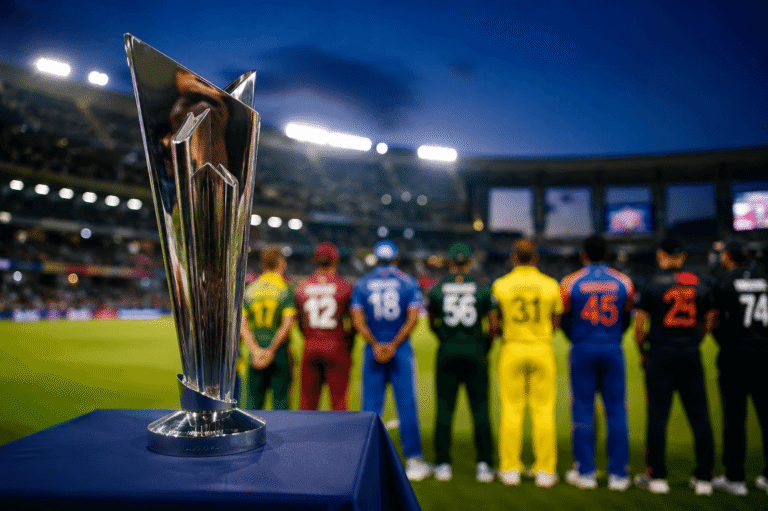

The International League T20, widely known as ILT20, is a relatively new addition to the global T20 calendar, launched in the United Arab Emirates to bring high-quality franchise cricket to the Gulf region during a window that avoids direct clashes with the sport’s more established leagues. Backed by significant investment and strong ties to some of cricket’s biggest franchise brands, ILT20 has quickly positioned itself as an ambitious new player in the increasingly crowded world of T20 leagues. This guide covers the tournament’s format, franchise structure, and its growing role in the global T20 ecosystem.
Tournament Format and Scheduling
ILT20 follows a round-robin group stage leading into a playoff phase, scheduled during a January window carefully chosen to avoid direct overlap with several other major domestic T20 leagues around the world. This scheduling strategy has allowed the tournament to attract a strong pool of international players who might otherwise be unavailable during more congested periods of the global cricket calendar.
Franchise Ownership and Global Connections
Several ILT20 franchises share ownership groups with teams competing in other major T20 leagues around the world, including the IPL and other international competitions. This shared ownership model has allowed for coordinated player recruitment strategies and cross-league scouting insights, giving some ILT20 franchises access to talent identification networks built up over years of experience in other established leagues.
Building a New Cricketing Market
The UAE has long served as a neutral venue for cricket matches involving nations unable to host due to security or logistical concerns, giving the region an existing cricketing infrastructure and fanbase before ILT20’s launch. The tournament has built on this foundation, aiming to establish a genuinely home-grown fanbase in the Gulf region rather than relying purely on cricket tourism from fans of visiting international players.
Player Recruitment and Talent Pool
ILT20 franchises have generally pursued a mix of established international stars and emerging talent from around the cricketing world, using the tournament’s favorable scheduling window to attract players who might otherwise be tied up with national duty or other league commitments during more congested parts of the calendar. This approach has helped the league build competitive squads relatively quickly despite being a newer addition to the global T20 landscape.
Frequently Asked Questions
Where is ILT20 played?
The International League T20 is played in the United Arab Emirates.
When does the ILT20 season take place?
The tournament is generally scheduled during January, a window chosen to avoid overlap with several other major T20 leagues.
Why do some ILT20 franchises share ownership with other leagues?
Shared ownership groups allow for coordinated scouting and recruitment strategies across multiple T20 competitions worldwide.
Conclusion
ILT20’s ambitious approach to franchise ownership, favorable scheduling, and market development has positioned it as one of the more interesting newer additions to the global T20 landscape. Its continued growth will likely depend on building a genuinely engaged local fanbase alongside its already strong international player recruitment strategy.
Venue Conditions in the UAE
Cricket in the UAE has historically been played on generally batting-friendly surfaces, though evening dew and desert conditions can shift the balance toward bowlers as matches progress, particularly under lights. Franchises building squads for ILT20 have needed to account for these conditions specifically, often prioritizing spin-bowling depth and death-overs specialists capable of adapting to the surface behavior typical of the region’s grounds.
Competing in a Crowded T20 Calendar
ILT20 enters a global T20 landscape that already includes several well-established leagues, meaning the tournament has had to differentiate itself through scheduling strategy, franchise investment, and player recruitment rather than relying on decades of accumulated history the way older leagues can. This competitive pressure has arguably pushed ILT20 to innovate more aggressively in areas like franchise ownership structures and player recruitment networks than some more established competitions might have needed to.
For fans following the tournament, tracking which established league franchises have ownership ties to specific ILT20 teams often provides useful context for understanding a team’s recruitment strategy and playing style heading into each season.
As the tournament continues to build its own independent identity separate from its sister franchises in other leagues, ILT20 has an opportunity to grow into a genuinely significant fixture on the calendar in its own right, rather than simply being viewed as an extension of existing global franchise networks operating in a new region during a convenient scheduling window.
Early signs suggest genuine local interest is building in the UAE, helped by the region’s already substantial expatriate cricket-following population, which gives ILT20 a built-in audience base that many newer T20 leagues in non-traditional cricketing markets simply do not have access to from day one.
That built-in audience, combined with strong financial backing and a strategically chosen window on the calendar, gives ILT20 a genuinely strong foundation to build from as it works to establish itself as a long-term fixture in world cricket rather than a short-lived experiment.
Whether it eventually rivals the sport’s oldest and most established T20 leagues in prestige will likely take several more seasons to determine, but the early trajectory has been promising for a tournament still in its relative infancy.
For now, the strong recruitment, sensible scheduling window, and growing local fanbase all point toward a league with real staying power in the crowded modern T20 landscape.
Cricket fans across the region now have a genuinely competitive local franchise league to follow throughout January, a significant shift from the UAE’s previous role as primarily a neutral hosting venue for other nations’ cricket.
That evolution from neutral host to genuine cricketing home is arguably ILT20’s most significant achievement so far, regardless of which franchise ends up lifting the trophy in any given season.
That shift is exactly what long-term sustainable growth in a new cricketing market is supposed to look like.
ILT20 is still early in that journey, but the direction of travel looks encouraging.
Time, as always in cricket, will tell the rest of the story.
Until then, the desert nights of January belong to ILT20.