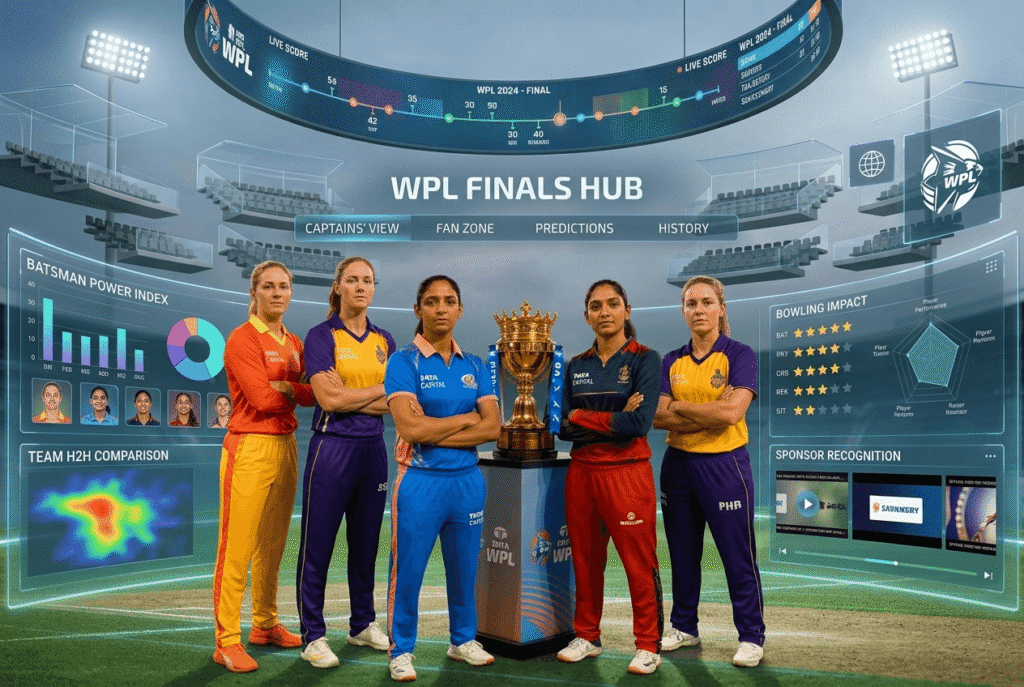
The Women’s Premier League, launched in India as the women’s counterpart to the IPL, has quickly become one of the most significant developments in women’s cricket history, bringing substantial financial investment, elite international talent, and dramatically increased visibility to the women’s game in one of cricket’s largest and most passionate markets. Featuring franchises built around major Indian cities, the WPL has transformed career opportunities and earning potential for female cricketers almost overnight. This guide covers the tournament’s format, franchise structure, and its remarkable impact on women’s cricket globally.
Tournament Format and Structure
The WPL features a round-robin group stage followed by a playoff phase, broadly mirroring the format used by the men’s IPL, giving the competition an immediately familiar structure for cricket fans already accustomed to franchise T20 cricket in India. This structural similarity has helped the WPL build audience engagement quickly, drawing on the massive existing fanbase for franchise cricket that IPL had already cultivated over more than a decade.
Unprecedented Financial Investment
The WPL launched with franchise valuations and player auction prices that dramatically exceeded any previous women’s cricket competition worldwide, signaling a genuine shift in how women’s cricket is valued commercially. This substantial financial investment has translated directly into improved playing conditions, coaching resources, and player compensation, fundamentally changing what a professional cricket career can look like for talented female players, particularly those from India and other participating nations.
Impact on Indian Women’s Cricket
Beyond the immediate entertainment value, the WPL has had a profound developmental impact on Indian women’s cricket, giving domestic players regular exposure to elite-level competition against international stars, exposure that was previously far more limited. This increased competitive exposure has been credited with accelerating the development of several Indian players who have since become key contributors to the national team’s white-ball setup.
Global Player Participation
The WPL has attracted the world’s best women’s cricketers, with international stars from Australia, England, and other leading nations competing alongside India’s deepest pool of domestic talent. This concentration of elite global talent has made the WPL one of the highest-standard women’s T20 competitions anywhere in the world, comparable in quality to the sport’s most established men’s franchise leagues.
Frequently Asked Questions
When was the WPL launched?
The Women’s Premier League launched as India’s premier women’s T20 franchise competition, mirroring the structure of the men’s IPL.
Why is the WPL considered financially significant?
The tournament launched with franchise valuations and auction prices far exceeding any previous women’s cricket competition, signaling a major shift in commercial investment.
Does the WPL feature international players?
Yes, the tournament attracts elite international talent alongside India’s deep pool of domestic women’s cricket players.
Conclusion
The WPL’s combination of substantial financial investment, elite international talent, and India’s massive cricket-following population has made it one of the most significant developments in women’s cricket history. Its continued growth is likely to keep reshaping career opportunities and standards for female cricketers worldwide.
Broadcast Reach and Commercial Growth
The WPL has secured substantial broadcast deals reflecting genuine confidence in the tournament’s commercial potential, with production quality and promotional support comparable to major men’s franchise leagues. This broadcast investment has helped the WPL build a large, engaged viewership base quickly, further reinforcing the positive commercial cycle that continues to attract additional sponsorship and investment into the competition.
Auction Strategy and Squad Building
WPL franchises navigate an annual player auction to build their squads, generally blending marquee international signings with India’s deep domestic talent pool and emerging young players given genuine opportunities to develop alongside experienced teammates. This auction structure has quickly become one of the most closely watched off-season events in women’s cricket, given the significant sums now involved in securing top players.
For fans wanting to follow the rapid growth of women’s cricket globally, the WPL offers one of the clearest and most compelling case studies, demonstrating how substantial financial investment combined with a passionate existing fanbase can transform a sport’s commercial trajectory in a remarkably short period of time.
Young Indian players entering the WPL system now have access to training resources, coaching staff, and competitive exposure that simply did not exist for women’s cricketers in India even a few years earlier, fundamentally reshaping what a young girl taking up the sport today can realistically aspire toward as a professional career path.
That shift in aspiration and opportunity may ultimately prove to be the WPL’s most lasting legacy, even beyond its considerable commercial and broadcast success, since it has genuinely changed how women’s cricket is perceived as a viable, well-compensated professional pursuit within India’s broader sporting culture.
International players competing in the WPL have also spoken positively about the tournament’s organization and playing standards, comparisons that carry genuine weight given how many of these same players have extensive experience across the world’s other major women’s T20 leagues and can speak credibly to how the WPL measures up against established competition elsewhere.
That positive reception from a genuinely global playing group speaks well to the WPL’s long-term prospects as a fixture on the international women’s cricket calendar, rather than a short-lived commercial experiment that might fade once initial launch enthusiasm settles.
Early signs suggest the WPL is here to stay, with each season building further on the strong foundation established at launch.
That momentum shows no signs of slowing, and neither does the ambition behind it.
Few competitions in any sport have transformed a professional landscape this quickly.
That speed of transformation is the WPL’s defining achievement.
Watch it continue to unfold, season after season.
Indian cricket has led before; this time, women’s cricket leads alongside it.
That parity, hard-earned and genuinely deserved, is what the WPL represents at its core.
Follow along, and watch history continue to be written.
It is happening right now, one match at a time.
Do not miss it.
The WPL has already changed the game, and it is only getting started.
That is a genuinely exciting place for women’s cricket to be.
Enjoy the ride.
Every season adds another chapter.
Read it as it happens.