Women’s cricket has experienced remarkable growth over the past decade, transforming from a sport that received minimal mainstream coverage into a genuinely global competition drawing record attendances, significant broadcast deals, and increasingly professional playing structures. From the launch of dedicated franchise leagues to growing prize money and player contracts, the women’s game has made substantial strides toward the recognition and investment long enjoyed by the men’s side of the sport. This guide covers the structure of women’s cricket, its recent growth, and what fans should know to follow the sport effectively.
International Women’s Cricket Structure
Like the men’s game, women’s international cricket is played across Test, ODI, and T20I formats, though Test cricket remains considerably less frequent in the women’s game due to scheduling and historical investment patterns. Women’s ODI and T20I cricket has grown significantly in both quality and competitiveness, with a broader group of nations now capable of challenging the traditionally dominant teams at major ICC tournaments compared to previous eras of the sport.
The Rise of Women’s Franchise Leagues
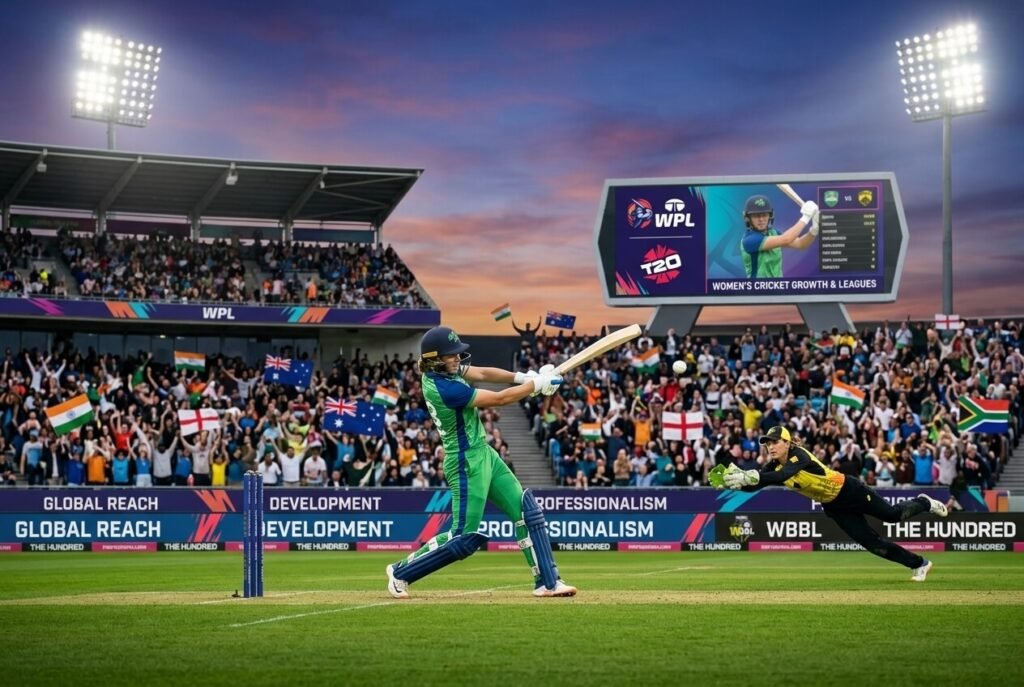
The launch of dedicated women’s franchise T20 leagues, including the Women’s Premier League in India, the Women’s Big Bash League in Australia, and women’s competitions running alongside The Hundred in England, has significantly boosted both the professional opportunities available to female players and the sport’s overall visibility. These leagues have provided female cricketers genuine full-time professional playing and earning opportunities that were largely unavailable just a decade earlier, fundamentally changing the career pathway available to talented young players entering the women’s game.
Growing Broadcast Coverage and Viewership
Broadcast coverage of women’s cricket has expanded considerably, with major tournaments now receiving production quality and promotional support comparable to men’s events, a significant shift from the limited coverage the sport historically received. This increased visibility has translated into growing viewership figures and stadium attendances, creating a positive commercial cycle that continues to attract further investment into the women’s game from broadcasters, sponsors, and cricket boards alike.
Investment in Player Development
Cricket boards around the world have increasingly invested in dedicated women’s development pathways, including specialized coaching, improved domestic structures, and increased central contracts for female players. This investment has helped narrow the gap in playing standards between traditionally dominant nations and emerging women’s cricket countries, contributing to more competitive and unpredictable major tournaments in recent years.
Frequently Asked Questions
What formats does women’s international cricket include?
Women’s cricket is played across Test, ODI, and T20I formats, though Test matches remain less frequent than in the men’s game.
What are some major women’s franchise T20 leagues?
Notable leagues include the Women’s Premier League in India, the Women’s Big Bash League in Australia, and The Hundred’s women’s competition in England.
How has women’s cricket grown commercially in recent years?
Increased broadcast investment, growing attendances, and expanded sponsorship have significantly boosted the sport’s commercial profile and player earning potential.
Conclusion
Women’s cricket’s rapid growth in professionalism, visibility, and competitive depth over the past decade represents one of the most significant positive developments in the sport’s recent history. Continued investment in development pathways and franchise leagues suggests this growth trajectory is likely to continue, further narrowing the gap with the men’s game in both quality and commercial standing.
Emerging Nations and Growing Competitiveness
Beyond the traditionally dominant women’s cricket nations, several emerging countries have made significant strides in recent years, benefiting from increased ICC development funding and growing domestic investment in women’s programs. This broadening competitive base has made major women’s ICC tournaments increasingly unpredictable, adding genuine sporting intrigue beyond simply anticipating which of the sport’s historically strongest teams will reach the latter stages of the competition.
The Path Toward Full Professionalization
While significant progress has been made, women’s cricket continues working toward full professionalization across all participating nations, with some countries still offering considerably less financial support and infrastructure than others. Closing this gap remains an ongoing priority for the ICC and individual cricket boards, recognizing that a truly global, competitive women’s game requires sustained investment across every participating nation, not just the sport’s traditionally wealthier cricketing countries.
Role Models and Growing Youth Participation
The increased visibility of elite women’s cricket has had a meaningful impact on youth participation, with growing numbers of young girls taking up the sport inspired by the increasingly high-profile role models now visible through expanded broadcast coverage and social media presence. This youth participation growth is a critical piece of the sport’s long-term sustainability, ensuring a broadening talent pipeline capable of sustaining the increased professionalism and competitiveness the women’s game has achieved in recent years.
For fans newer to women’s cricket, following one of the major franchise leagues alongside international fixtures offers an accessible way to engage with the sport’s rapidly rising standard, with many matches now readily available through mainstream streaming and broadcast platforms that previously offered limited or no coverage of women’s cricket at all.
As investment continues to grow and playing standards rise further, women’s cricket appears well positioned to continue its remarkable trajectory, building on a decade of genuine progress toward the recognition, professionalism, and competitive depth the sport has long deserved but only recently begun to fully receive.
Prize money at major women’s ICC tournaments has also seen significant increases in recent years, moving closer toward parity with equivalent men’s events, a shift that reflects broader institutional recognition of the growing commercial value and sporting quality of the women’s game at its highest level.
This financial progress, alongside improved playing conditions and increased match volume, has given female players greater ability to commit fully to professional cricket careers, rather than needing to balance the sport with other employment, a barrier that historically limited full-time professional development for many talented players.
That shift toward genuine full-time professionalism, more than any single tournament win or record, may ultimately prove to be the most significant and lasting achievement of women’s cricket’s remarkable decade of growth.
The next decade looks set to build on that foundation further still.
Women’s cricket has arrived, and it is here to stay.