The Desert Cup brings competitive cricket to the Gulf region during a scheduling window designed to avoid clashing with other major franchise leagues around the world, offering fans in the UAE and surrounding areas access to genuine tournament cricket outside the traditional bilateral series calendar. As Gulf cricket infrastructure has developed considerably in recent years, tournaments like the Desert Cup have played a role in building local competitive cricket culture in a region historically known more for hosting neutral-venue matches than fielding its own competitive tournaments. This guide covers the tournament’s format and its place within the region’s growing cricket ecosystem.
Tournament Format and Structure
The Desert Cup typically features a compact group stage followed by knockout matches, a format designed to deliver a concentrated, accessible tournament experience within a short scheduling window. This compact structure allows the tournament to fit into gaps in the broader global cricket calendar without competing directly with more established leagues for player availability or broadcast attention.
Building on the UAE’s Cricket Infrastructure
The UAE has long served as a neutral hosting venue for international cricket involving nations unable to play at home due to security or logistical concerns, giving the region substantial existing cricketing infrastructure before tournaments like the Desert Cup arrived. This established infrastructure, including well-regarded grounds and broadcast facilities, has made it comparatively straightforward to host new competitive tournaments in the region.
A Growing Regional Cricket Culture
Tournaments in the Gulf region have benefited from a substantial expatriate cricket-following population, giving events like the Desert Cup a built-in audience base that many newer tournaments in non-traditional cricketing markets simply do not have access to from day one. This existing fanbase has helped support the growth of genuinely competitive tournament cricket in the region beyond its traditional role as a neutral venue.
Frequently Asked Questions
Where is the Desert Cup played?
The tournament is played in the Gulf region, building on the UAE’s established cricketing infrastructure.
Why does the Gulf region host so many cricket tournaments?
The region’s substantial expatriate cricket-following population and existing infrastructure make it a natural hub for tournament cricket.
What format does the Desert Cup use?
The tournament typically uses a compact group stage followed by knockout matches within a short scheduling window.
Conclusion
The Desert Cup’s role in building genuine competitive cricket culture in the Gulf region reflects the broader growth of cricket infrastructure and fandom in a market long known primarily for hosting neutral-venue matches. Its continued development adds to the region’s growing significance within the sport’s global landscape.
Player Participation and Regional Talent
Tournaments hosted in the Gulf region often attract a mix of associate nation cricketers, expatriate club players, and occasionally touring professionals looking for competitive match practice outside their home season, giving the Desert Cup a genuinely diverse playing field compared to more traditional domestic competitions elsewhere in the world.
Growing Broadcast Reach
As streaming platforms have expanded their coverage of smaller regional tournaments, events like the Desert Cup have gained visibility well beyond their immediate local audience, helping build broader awareness of Gulf cricket among fans in more traditional cricketing nations who might not otherwise encounter tournament cricket from this specific region.
For fans interested in cricket’s expansion into newer markets, the Desert Cup offers a genuinely interesting case study in how existing infrastructure, built originally for hosting neutral-venue international matches, can be successfully repurposed to support homegrown competitive tournament cricket over time.
Desert conditions themselves present a distinctive challenge for players, with dry heat and occasionally dusty outfields requiring genuine physical adaptation compared to matches played in more traditional cricketing climates, adding a unique tactical dimension that experienced regional players learn to navigate effectively over repeated tournament appearances.
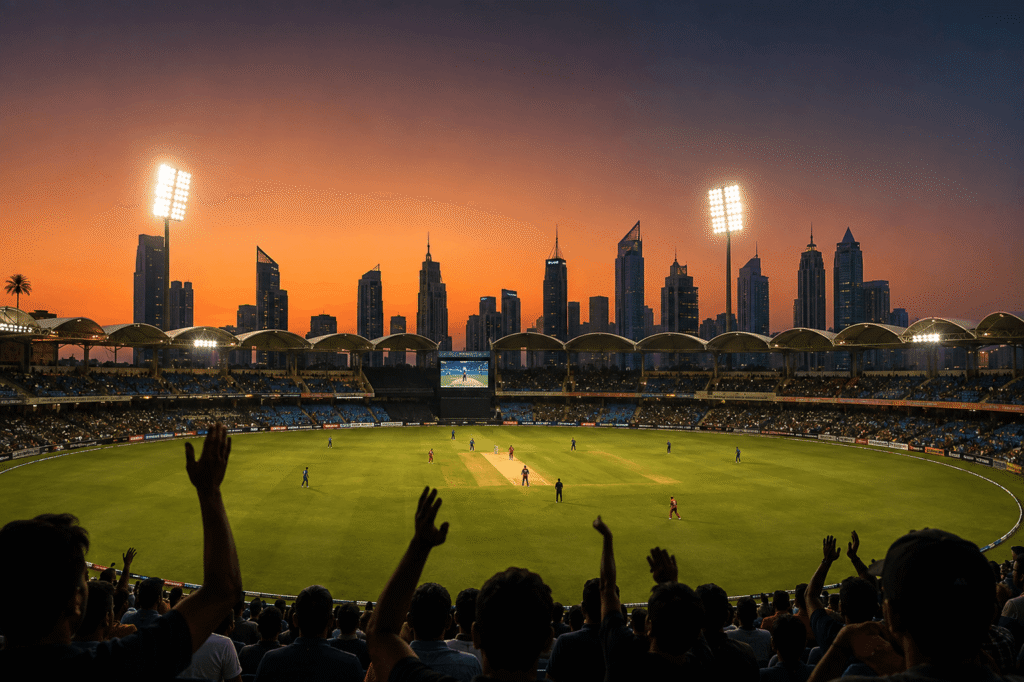
Evening matches under floodlights have become the standard scheduling approach for tournaments like the Desert Cup, both to avoid the most intense daytime heat and to maximize spectator comfort and broadcast viewing conditions during the cooler evening hours typical of Gulf region cricket scheduling.
For fans in the region, the Desert Cup offers something previously in short supply, a genuine home tournament to follow with local rooting interest, rather than only watching international teams pass through on neutral-venue duty without any specific regional stake in the outcome.
That shift toward homegrown competitive stakes reflects a broader maturation of Gulf cricket culture, moving beyond its traditional hosting role toward genuinely building its own tournament identity and fanbase over time.
As more tournaments follow this model, the Gulf region’s reputation within world cricket looks set to keep evolving, from a purely neutral hosting hub toward a genuinely significant emerging cricketing market in its own right.
Check the fixture list, and see what a Gulf evening of competitive cricket has to offer.
The region has come a long way from hosting neutral fixtures alone, and the growth continues each season.
That growth is exactly what makes the Desert Cup and similar Gulf tournaments worth watching closely as the region’s cricketing identity continues to take shape.
Give it your attention, and watch a newer cricketing market build its own story from the ground up.
Every new season adds another chapter to that story.
Worth following as it unfolds.
Gulf cricket is genuinely on the rise, and tournaments like this one are the proof.
That rise is well worth tracking.
Regional pride is building alongside the infrastructure, match by match, season by season.
That combination is exactly what sustainable cricketing growth in a new market looks like.
Watch it continue to unfold in the seasons ahead, as the region keeps building on its early momentum.
That momentum has been genuinely well earned, given how far the region has come in a relatively short span of time.
Give the Desert Cup a look, and see the next stage of that story unfold for yourself.
Gulf cricket is only getting started.
Be part of it early.
The next great cricketing market may be building itself right here, in the desert evenings of the Gulf.
Keep watching.
It has plenty more to give.
Stay tuned.