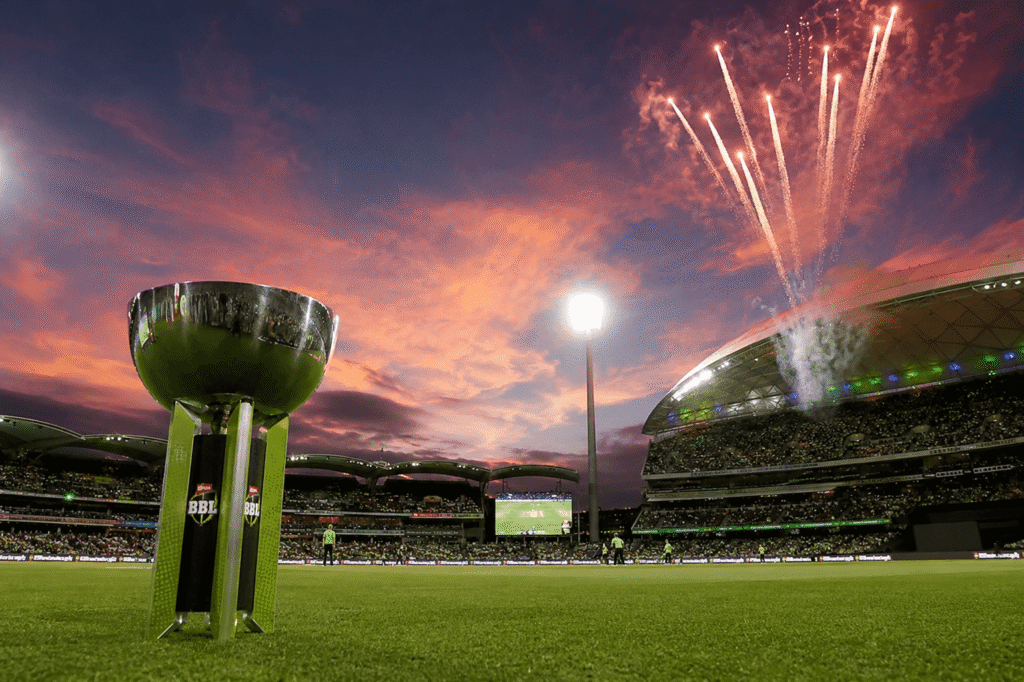
The Big Bash League, Australia’s premier domestic T20 competition, has grown since its 2011 launch into one of the most-watched and commercially successful T20 leagues outside the IPL. Played during the Australian summer, the BBL features eight city-based franchises and has become known for its family-friendly matchday atmosphere, innovative broadcast presentation, and a talent pipeline that has produced numerous Australian internationals. This guide covers the league’s format, franchise structure, and what has made it one of the standout domestic T20 competitions globally.
Tournament Format and Structure
The BBL features eight franchises representing Australia’s major cities, playing a round-robin group stage before the top teams advance to a knockout playoff phase. The league’s relatively compact schedule, condensed into the Australian summer window between December and February, allows it to attract star international players during a period when many other leagues around the world are not competing directly for the same talent pool.
City-Based Franchise Structure
Each BBL franchise represents a major Australian city, often sharing home grounds and fanbases with the traditional state-based teams that dominate Australian domestic cricket in longer formats. This structure has helped the BBL build strong local followings quickly, with franchises leaning into regional rivalries that Australian cricket fans were already familiar with from other sports and domestic competitions.
A Pathway for Emerging Talent
The BBL has become an important platform for young Australian players to gain exposure to high-pressure T20 cricket against quality opposition, with several breakthrough BBL performers going on to earn selection for the Australian national team shortly after standout league campaigns. This developmental role has made the competition valuable to Cricket Australia beyond its commercial success, functioning as a genuine feeder system into the international side.
International Player Participation
Because the BBL runs during the Australian summer, a period when several other major T20 leagues are not in session, the tournament has generally attracted strong international player participation, giving fans the chance to watch overseas stars compete alongside Australia’s own emerging and established talent. This mix of local development and international star power has been a key ingredient in the league’s growing commercial appeal both domestically and among international broadcasters.
Frequently Asked Questions
How many teams compete in the BBL?
The Big Bash League features eight franchises representing major Australian cities.
When is the BBL season played?
The tournament is played during the Australian summer, generally running from December through February.
Why is the BBL considered important for Australian cricket?
The league serves as a significant talent development pathway, with several breakout performers going on to represent Australia internationally.
Conclusion
The Big Bash League’s combination of city-based rivalries, strong talent development pathway, and favorable scheduling window has made it one of the most successful domestic T20 competitions in world cricket. Its role in both entertaining fans and developing future Australian internationals continues to make it a tournament worth following closely each summer.
Broadcast Innovation and Fan Engagement
The BBL has been widely credited with pioneering several broadcast innovations that have since been adopted by other T20 leagues around the world, from enhanced statistical graphics to more dynamic camera work aimed at making the format more accessible to casual and family viewers. This focus on presentation, alongside affordable ticket pricing aimed at families, has helped the league build one of the more diverse in-stadium crowds in world cricket.
Women’s Big Bash Connection
The BBL runs alongside the Women’s Big Bash League, with several franchises sharing branding, ownership, and home venues across both competitions. This dual structure has helped both tournaments grow together commercially, with fans increasingly following both the men’s and women’s competitions as part of the same broader Big Bash brand experience each Australian summer.
Squad Building and the Draft System
Unlike some T20 leagues that rely purely on an open auction, the BBL has used a draft-style system for building squads in various seasons, giving franchises a structured way to secure both marquee international signings and promising domestic talent. This approach has generally helped maintain competitive balance across the league, preventing any single franchise from consistently outspending its rivals to stockpile star power at the expense of the competition’s overall quality.
Rivalries and Regional Identity
Matches between city-based BBL franchises often carry an added layer of local pride, drawing on long-standing sporting rivalries between Australian cities that predate the league itself. This built-in rivalry structure has helped the BBL cultivate passionate, tribal support relatively quickly compared to some newer T20 leagues that had to build fan loyalty from scratch without any pre-existing regional sporting context to draw on.
For fans following the BBL for the first time, the simplest way in is to pick a city franchise and follow their squad through the group stage, since the format’s relatively short, fast-paced season means it does not take long to get a genuine feel for a team’s identity and playing style before the playoff race begins to take shape.
That combination of accessibility, strong talent pathways, and genuine local rivalry is exactly why the BBL has remained one of the most consistently well-attended domestic T20 leagues anywhere in the world since its launch.
Its continued growth, both in broadcast reach and in the quality of talent it attracts each summer, suggests the league is still far from reaching its ceiling as one of the sport’s premier domestic T20 competitions.
Each new season brings fresh storylines, whether that is a rising domestic talent forcing their way into national selection conversations or an overseas star adapting their game to Australian conditions for the first time.
That steady stream of new narratives, layered on top of established city rivalries, is what keeps the BBL feeling fresh even as it approaches its second decade on the Australian sporting calendar.
For a competition built partly on family-friendly entertainment, the BBL has clearly succeeded in keeping serious cricket fans engaged as well.
That dual appeal remains the league’s greatest strength heading into every new summer.
Long may it continue.
Australian summer cricket simply would not be the same without it.